
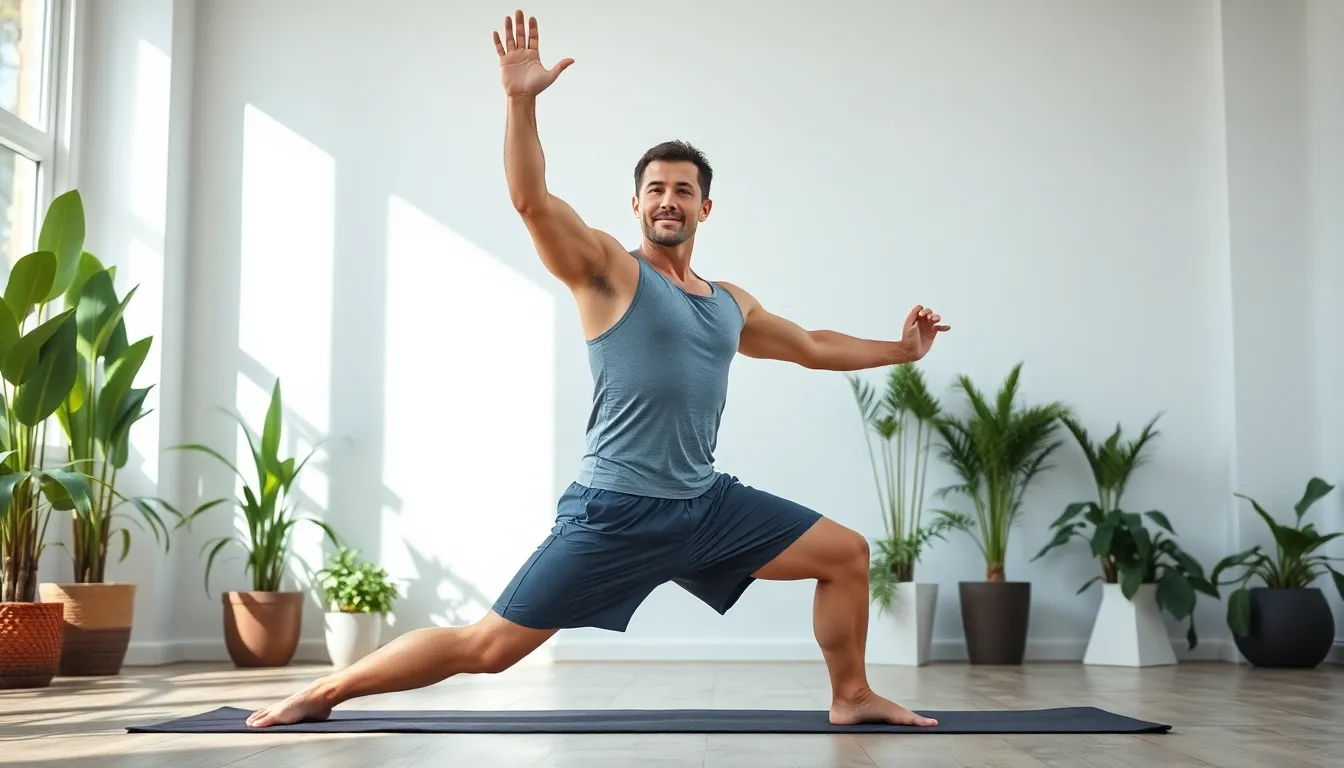
Yoga isn’t just for women; it’s a powerful practice that offers immense benefits for men too. As more men embrace this ancient discipline, they discover a path to physical strength, mental clarity, and emotional balance. The misconception that yoga is solely a feminine activity is fading fast, making way for a new wave of practitioners who recognize its transformative potential.
Incorporating yoga into a man’s fitness routine can enhance flexibility, build muscle, and improve overall well-being. From athletes seeking recovery to busy professionals looking for stress relief, men are finding that yoga provides unique advantages that traditional workouts often overlook. As the popularity of men’s yoga grows, so does the understanding of its ability to foster resilience and mindfulness in a fast-paced world.
Table of Contents
ToggleOverview of Men’s Yoga
Men’s yoga focuses on enhancing physical health, mental clarity, and emotional stability. It emphasizes building strength, increasing flexibility, and promoting relaxation through various postures and breathing techniques. The practice caters to diverse skill levels, from beginners to advanced yogis, making it accessible for any man seeking to improve his fitness.
Physical benefits include increased muscle tone and enhanced athletic performance. Research shows that regular yoga practice can significantly reduce injury risk, making it a valuable tool for athletes in high-impact sports. Additionally, yoga supports recovery processes by helping muscles relax and rejuvenate.
Mental advantages encompass stress reduction and improved focus. Studies indicate that yoga can lower cortisol levels, leading to enhanced mood and better emotional regulation. Mindfulness practices integrated into yoga sessions further help cultivate a sense of presence and awareness, essential for managing daily challenges.
Men’s yoga also fosters a supportive community, encouraging participants to connect with like-minded individuals. This social aspect promotes accountability and motivation, essential for maintaining a consistent practice.
As men’s yoga continues to evolve, it breaks down stereotypes surrounding masculinity and fitness. Men discover that yoga serves not only physical goals but also personal growth and resilience, addressing both body and mind in today’s demanding world.
Benefits of Men’s Yoga
Men’s yoga offers an array of benefits that enhance both physical and mental well-being. These advantages attract more men to the practice, revealing its multifaceted impact on their lives.
Physical Health Advantages
Men’s yoga enhances physical health through various postures, leading to increased muscle tone and flexibility. Specific benefits include:
- Muscle Strengthening: Regular practice targets major muscle groups, promoting overall strength.
- Improved Flexibility: Poses stretch muscles, reducing stiffness and enhancing range of motion.
- Enhanced Athletic Performance: Incorporating yoga improves coordination and balance, benefiting athletes.
- Injury Prevention: Increased flexibility and body awareness reduce the risk of sports-related injuries.
- Posture Correction: Yoga strengthens core muscles, promoting proper alignment and reducing back pain.
Mental Health Benefits
- Stress Reduction: Breathing techniques and mindfulness practices lower cortisol levels, alleviating anxiety.
- Improved Focus: Concentration exercises enhance mental clarity and cognitive function.
- Emotional Regulation: Regular practice fosters emotional awareness, promoting better responses to stressors.
- Mindfulness Development: Mindfulness practices cultivate a present-focused mindset, reducing distractions.
- Community Support: Group classes foster connections, motivating participants and enhancing accountability.
Popular Styles of Men’s Yoga
Various styles of men’s yoga cater to different preferences and fitness levels, providing diverse experiences that enhance both physical and mental health. Here are two popular styles practitioners often explore.
Hatha Yoga
Hatha yoga emphasizes foundational postures and alignment. It serves as an excellent introduction for beginners, focusing on breath control and proper technique. Classes typically include slower-paced sequences that allow for technique mastery and body awareness. Hatha yoga promotes flexibility, strength, and mental clarity, making it suitable for men seeking a balanced physical and mental practice.
Vinyasa Yoga
Vinyasa yoga features dynamic, flowing sequences that synchronize movement with breath. This style appeals to those who prefer a more energetic workout, incorporating a range of postures that build strength and endurance. Classes often vary in intensity and offer creative transitions, keeping practitioners engaged. Vinyasa yoga enhances cardiovascular fitness, improves overall body coordination, and promotes mindfulness, contributing to a holistic approach to wellness.
Finding the Right Class
Selecting the right yoga class can enhance the experience for men new to the practice. Understanding personal goals and preferences is essential in making an informed decision.
Tips for Beginners
- Identify goals: Determine specific objectives, whether it’s improving flexibility, building strength, or reducing stress.
- Research styles: Explore different yoga styles, such as Hatha for foundational practice or Vinyasa for flow-based movement.
- Start slow: Choose beginner classes to grasp basic postures and breathing techniques, avoiding overwhelming experiences.
- Ask questions: Communicate with instructors regarding any prior injuries or concerns to receive tailored guidance.
- Stay consistent: Attend classes regularly to build familiarity with the poses and develop a routine.
Online vs. In-Person Classes
- Convenience: Online classes offer flexibility, allowing participants to practice from home, eliminating travel time.
- Variety: In-person classes often provide diverse settings and community interaction, which can boost motivation and engagement.
- Feedback: In-person sessions allow for real-time correction from instructors, ensuring proper alignment and reducing injury risk.
- Social connection: Participating in group classes fosters connections among participants, enhancing accountability and support.
- Access: Online platforms can provide access to a broader range of instructors and styles, accommodating individual preferences.
Exploring these factors helps men find the yoga class that best suits their needs, fostering a more fulfilling practice.
Common Misconceptions About Men’s Yoga
Men’s yoga faces several misconceptions that hinder broader participation. Understanding these myths helps clarify the advantages of the practice.
- Yoga is Only for Women: This misconception overlooks the increasing number of men participating in yoga. Many studies, such as those published in the Journal of Athletic Training, demonstrate yoga’s effectiveness for improving athletic performance and preventing injuries among male athletes.
- Yoga Isn’t a Workout: People often assume yoga lacks physical intensity. In reality, styles like Vinyasa and Ashtanga provide rigorous workouts that enhance strength and flexibility. These styles require significant physical effort, challenging participants while offering cardiovascular benefits.
- Yoga Requires Flexibility: Many men believe they must be flexible to start yoga. However, yoga improves flexibility over time, accommodating practitioners at all levels. Beginners often experience quick gains in flexibility and strength, highlighting yoga’s adaptability to various body types.
- Yoga is Only About Stretching: Some perceive yoga as primarily a series of stretches. In truth, yoga includes strength-building postures, breath control, and meditation practices, addressing both physical and mental fitness. A balanced approach fosters overall health and well-being.
- Yoga is Only for Relaxation: While relaxation is a key component, yoga also enhances focus, discipline, and physical performance. Many athletes incorporate yoga to boost concentration and mental clarity, benefiting their overall athleticism.
- Men Can’t Practice in Mixed Classes: Some men feel uncomfortable participating in mixed classes. However, diverse environments foster camaraderie and diversity, broadening perspectives. Community settings promote comfort and confidence for all participants.
Debunking these misconceptions encourages more men to explore yoga’s numerous benefits, enriching their physical and mental health journeys.
Men’s yoga is more than just a fitness trend; it’s a transformative practice that enhances physical strength and mental clarity. As men increasingly embrace yoga, they discover its ability to foster emotional balance and resilience. The supportive community found in yoga classes encourages connection and accountability, making the journey more rewarding.
With various styles available, from Hatha to Vinyasa, there’s a perfect fit for every individual. As misconceptions fade and participation grows, men’s yoga continues to challenge traditional views on masculinity and fitness. Ultimately, it offers a holistic approach to well-being that benefits both body and mind, proving that yoga is a powerful tool for personal growth and health.